Your Brazilian Capoeira Angola vs Regional App Says You're Practicing. Here's Why You're Not Improving.
You've been logging sessions for months. Your FightCamp tracks rounds completed, calories burned, training days. The streaks are intact. The numbers pile up.
And your skill level haven't budged in a season.
The apps aren't lying. You are training. The problem isn't that you're not practicing. The problem is that practice and tracking aren't the same thing.
Slow form repetition isn't progress
Every session follows the same pattern: ginga practice, choreographed sequences, drum circle play without pressure. This is slow form repetition. Comfortable training on familiar ground. The default.
The comfort makes it sustainable. You can show up. You can do it again tomorrow. That consistency is real. But consistency in what?
When every session happens at the same intensity on the same drills, your fight reflexes settles. Your conditioning improves for a window — maybe four to eight weeks — then plateaus. Your body adapts to the stimulus. The drills that felt challenging in week two feels automatic in week eight.
FightCamp shows you the output (rounds, time, calories). It doesn't show you the quality of what happened during those 75 minutes. It can't distinguish between a session that pushed your ability forward and one that simply maintained it.
FightCamp, JEFIT, Boxing Timer Pro track volume, not structure
Every major brazilian capoeira angola vs regional training app answers the same question: Did you practice, and how much?
None of them ask: Did you do the right session today in the right sequence?
A structured practice plan has layers. Slow form repetition has its place: it maintains what you already have. But maintenance alone doesn't improve your fighting ability. You need technique drills under pressure to build new capacity. You need sparring with intent to break through ceilings.
These sessions are different. They build different things. And they compound.
A capoeirista who cycles through growth work, building work, and maintenance will improve faster and more durably than a capoeirista who does weeks of the same slow form repetition.
But both capoeiristas' apps will show "completed." Both will have streaks. The apps treat all sessions as equivalent because they measure volume, not leverage.
The Brazilian jiu-jitsu principle
Cross one discipline and the pattern becomes obvious.
A BJJ practitioner can roll the same way every session. The sessions happen. But the level doesn't change. Slow form repetition isn't the same as practicing.
Brazilian capoeira angola vs regional has the same split. Slow form repetition is the equivalent. Working on actual evasion under aggression and transitioning between styles fluidly is isolating the hard passages. Both feel like training. Only one compounds.
Real change takes structure
Barbara LaFitte, music educator at Berklee College of Music, had been stuck — doing the same practice, getting the same results. When she restructured her sessions around these principles, the shift was immediate: "This methodology has transformed how I teach my students to practice." Not months of more practice. Weeks of different structure. Same hours. Different leverage.
Capoeiristas stuck at the same skill level typically respond by adding volume: "I'll practice more often." More of the same stimulus doesn't break the plateau. It deepens it.
The move is lateral, not vertical. Different session types. Different stimuli. Different order. That's what forces adaptation.
Before you need better tools
The training apps are excellent at what they do. FightCamp tracks rounds completed, calories burned, training days. JEFIT gives you structure.
And none of them solve the plateau because the plateau isn't a tracking problem. It's a design problem.
Before you need a better app, you need to know what you're tracking. You need to understand what technical development looks like. What live application requires. How to sequence them so they compound instead of interfere.
The app measures the outcome of that knowledge. The app doesn't create the knowledge.
Common questions
Should I stop using FightCamp?
No. These tools are excellent for confirmation and community. Use them. But don't mistake logging a session with designing a session. The app can't tell you whether today should be growth work or maintenance. That decision comes first. The app records it after.
How long until I break the plateau?
Most capoeiristas feel the difference in their very first structured session, because the moment you see how much of your time was slow form repetition and how little was actual development work, the problem becomes obvious. The skill level follow within days, not weeks.
What if I don't have a coach?
A framework replaces a coach for the design phase. Once you understand session leverage — what technical development actually builds, why live application spikes progress — you can sequence your own training. The methodology is learnable. The tools become secondary.
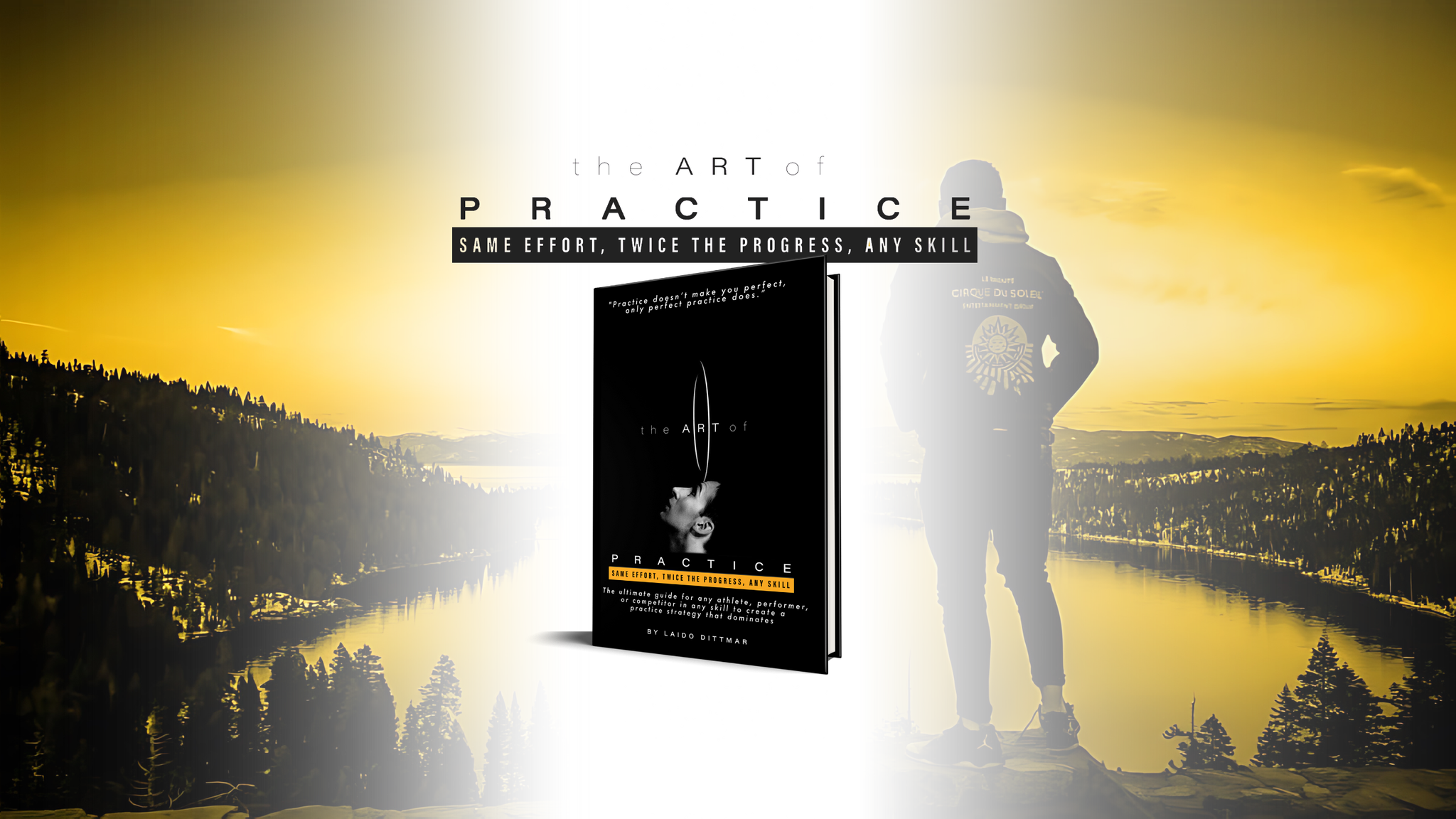
Laido Dittmar — fourth-generation circus performer, Cirque du Soleil Performer, one of four jugglers in the world to flash 10 rings with a balance, Winner of the Cirque du Soleil Prize Best Juggler 2026 — started with no talent and a decade behind his peers. He spent 20 years reverse-engineering how elite performers practice unconsciously, then wrote it down. The Art of Practice is the result: 17 techniques for structuring how you practice any physical skill. Not theory. Not motivation. A concrete operating system for your sessions. 14,000+ copies sold in 30+ countries.
Learn More About The Art of Practice →